
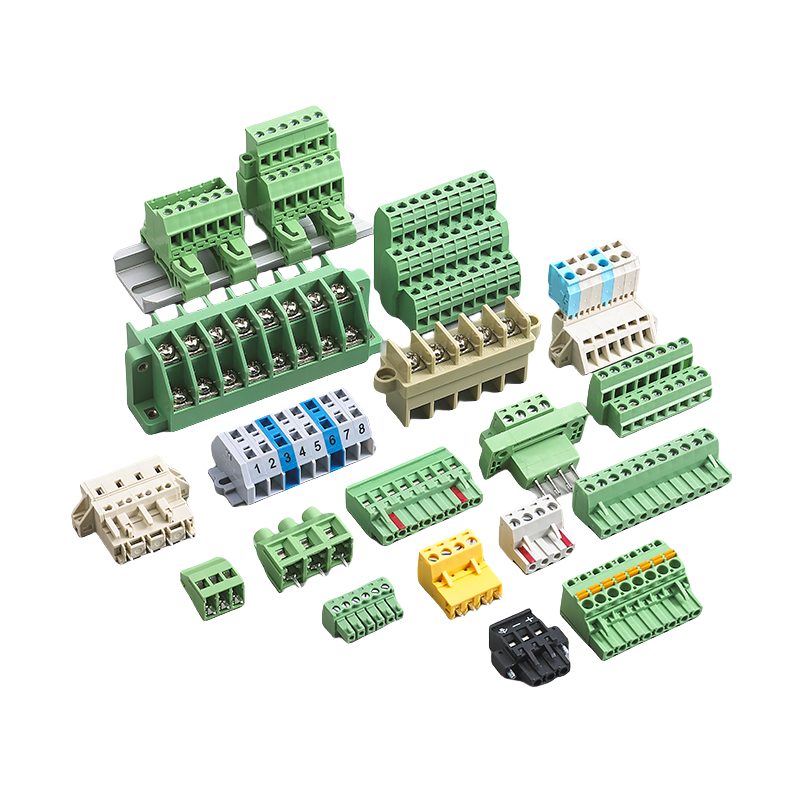
Why Pitch Is the First Thing You Set on a PCB Terminal Block
When engineers specify a PCB terminal block, pitch (the centre-to-centre distance between adjacent contacts) is usually locked in before anything else. It dictates how tightly you can pack connections, what creepage and clearance the layout can support, and which mating connectors or competitor parts will fit. Get the pitch wrong and the rest of the design cannot be reconciled.
What “Pitch” Actually Means
Pitch is the spacing from the centre of one terminal to the centre of the next, measured in millimetres on metric drawings and in “mils” (1/1000 of an inch) on legacy imperial ones. A 5.08 mm block and a 200 mil block are the same part; a 5.00 mm block and a 5.08 mm block are not, and that single 0.08 mm is exactly where substitution mistakes happen.
The Four Pitches You Will See Most Often
- 3.50 mm & 3.81 mm (150 mil) – compact pluggable and screw blocks for signal and low-to-medium current (roughly 2.5–6 A). 3.81 mm is the imperial 150 mil standard.
- 5.00 mm & 5.08 mm (200 mil) – the workhorses of the industry. 5.08 mm (200 mil) is the single most common PCB terminal pitch in the world, covering signal, low power and many 10–15 A assemblies. 5.00 mm is the metric equivalent that looks the same but will not mate with a true 200 mil footprint.
Metric vs. Imperial: “Almost the Same” Is Not the Same
A large share of confusion comes from the metric/imperial overlap. Designs inherited from European (metric) and North American (imperial) tooling use pairs that differ by only 0.06–0.08 mm:
| Pitch | Imperial | Note |
|---|---|---|
| 3.50 mm | 137.8 mil | metric, no exact imperial twin |
| 3.81 mm | 150 mil | imperial standard |
| 5.00 mm | 196.9 mil | metric |
| 5.08 mm | 200 mil | imperial standard – do not substitute for 5.00 mm |
| 7.50 mm | 295.3 mil | metric |
| 7.62 mm | 300 mil | imperial standard |
| 10.00 mm | 393.7 mil | metric |
| 10.16 mm | 400 mil | imperial standard |
If you are replacing a competitor part, match the pitch exactly, not approximately. The standards that map cleanly to a round imperial value are 2.54 mm (100 mil), 3.81 mm (150), 5.08 mm (200), 6.35 mm (250), 7.62 mm (300), 9.52 mm (375), 10.16 mm (400) and 12.70 mm (500).
Full PCB Terminal Block Pitch Reference (2.50 mm – 27 mm)
| Pitch (mm) | Imperial | Typical use |
|---|---|---|
| 2.50 | 98.4 mil | Signal-level, low-current boards; dense layouts |
| 2.54 | 100 mil ✔ standard imperial | Standard 0.1″ (100 mil) grid; classic through-hole spacing |
| 3.50 | 137.8 mil | Compact pluggable blocks for space-limited designs |
| 3.81 | 150 mil ✔ standard imperial | 150 mil imperial standard; very common 2.5–6 A range |
| 5.00 | 196.9 mil | Metric 5 mm; signal & low-power distribution |
| 5.08 | 200 mil ✔ standard imperial | 200 mil imperial standard; the most common PCB pitch worldwide |
| 6.35 | 250 mil ✔ standard imperial | 250 mil; medium power, 10–15 A class |
| 7.50 | 295.3 mil | Metric 7.5 mm; compact power terminals |
| 7.62 | 300 mil ✔ standard imperial | 300 mil imperial; mains-adjacent, 15 A+ power |
| 8.00 | 315 mil | Metric 8 mm; high-current power distribution |
| 8.20 | 322.8 mil | 8.2 mm; heavy-duty & some solar/inverter use |
| 8.25 | 324.8 mil | 8.25 mm; specialty power & relay modules |
| 8.50 | 334.6 mil | 8.5 mm; industrial power, 20–30 A |
| 9.00 | 354.3 mil | 9 mm; robust power terminals |
| 9.50 | 374 mil | Metric 9.5 mm; high-power blocks |
| 9.52 | 375 mil ✔ standard imperial | 375 mil imperial; common high-power standard |
| 10.00 | 393.7 mil | Metric 10 mm; power & motor connections |
| 10.16 | 400 mil ✔ standard imperial | 400 mil imperial; 30–40 A power distribution |
| 11.00 | 433.1 mil | 11 mm; large-current & thick-cable terminals |
| 11.11 | 437.4 mil | 11.11 mm; specialty / legacy equipment |
| 11.60 | 456.7 mil | 11.6 mm; heavy-duty power |
| 12.00 | 472.4 mil | Metric 12 mm; high-current bus & power |
| 12.70 | 500 mil ✔ standard imperial | 500 mil imperial; 50 A class power terminals |
| 13.00 | 511.8 mil | 13 mm; heavy current distribution |
| 13.50 | 531.5 mil | 13.5 mm; industrial high-power |
| 14.00 | 551.2 mil | Metric 14 mm; large-current terminals |
| 14.50 | 570.9 mil | 14.5 mm; heavy-duty power |
| 14.60 | 574.8 mil | 14.6 mm; specialty high-power |
| 15.00 | 590.6 mil | Metric 15 mm; high-current busbars |
| 16.00 | 629.9 mil | 16 mm; motor & power distribution |
| 19.00 | 748 mil | 19 mm; high-current, short-circuit-rated blocks |
| 20.00 | 787.4 mil | 20 mm; very high current / power entry |
| 21.00 | 826.8 mil | 21 mm; heavy busbar terminals |
| 27.00 | 1063 mil | 27 mm; maximum pitch; high-voltage, extreme current |
Choosing Pitch by Current and Voltage
As a practical rule of thumb, larger pitch buys more creepage, clearance and current capacity:
- Under 5 mm (2.50, 2.54, 3.50, 3.81) – signal, low current, dense layouts.
- 5–7.62 mm (5.00, 5.08, 6.35, 7.50, 7.62) – general power, 10–15 A, rated around 250–300 V.
- 8–10.16 mm (8.0 through 10.16) – higher power, 20–40 A class.
- Above 12.7 mm (12.7 through 27) – heavy current, motor, power entry and high-voltage distribution.
Always confirm the final rating against the block’s datasheet, certified current-derating curves and the clearance required by your end-market safety standard.
Conclusion
Pitch is a short number with long consequences. Whether you need the universal 5.08 mm, a space-saving 3.50 mm, or a 27 mm high-current block, matching the exact spacing – metric or imperial – is what keeps your PCB terminal blocks interchangeable and compliant. For cross-reference, custom pitch or current-rating support, contact sales@goodelectric.net.